
Your website’s pages need to be indexed, targeted around the right queries, and useful for users to appear in Google AI Overviews.
No SEO tricks beyond that are going to help website owners moving forward. Some pages get cited by AI Overviews more often than others, and as someone who has an online audience, you should understand the reasons behind that.
Getting cited by AI Overviews matters a lot these days. Google’s AI Overviews capture a good chunk of searchers before they even have the chance to look at the links below them.
This guide is all you need to read to understand what Google officially says about AI Overviews, what independent studies have found, and what you should do about it.
What Are Google AI Overviews?
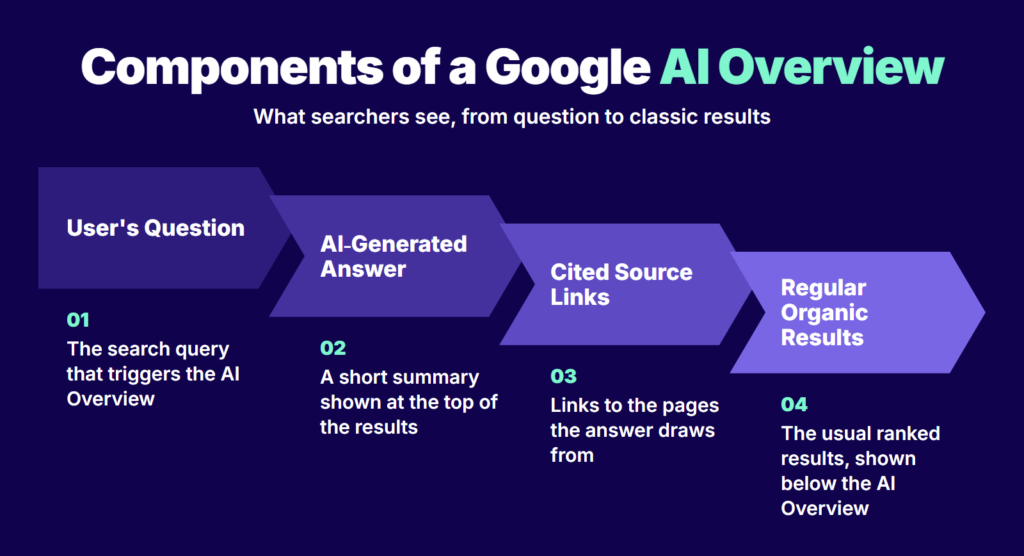
AI Overviews are another name for AI answers. They’re simply answers generated by AI at the top of Google search results.
These answers address the questions being asked by users and link to the pages Google uses to build those answers. Google recently brought together AI Overviews and AI Mode into one seamless experience.
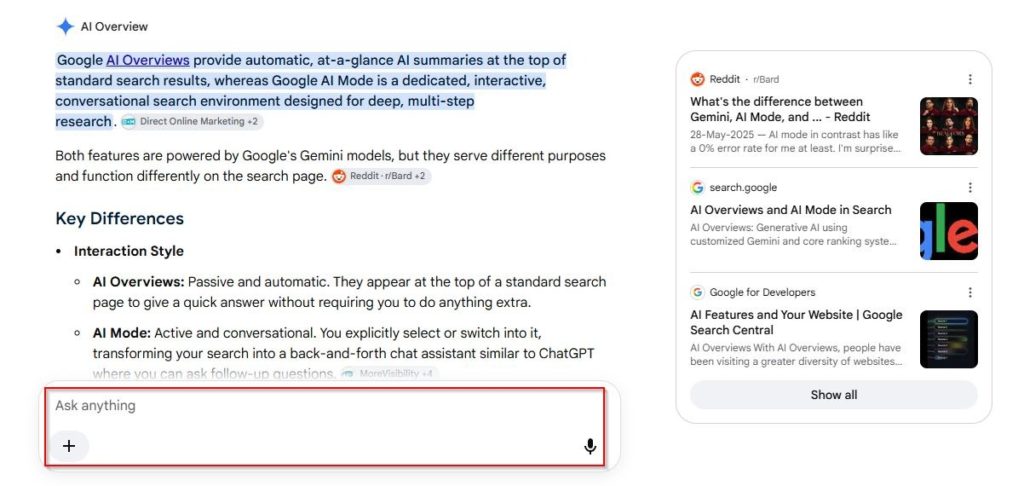
This means that these AI features are here to stay; they’re becoming a core part of how people use Google.
Why Does Appearing in AI Overviews Matter for Your Business?
Anyone with a sizeable online audience can’t afford to ignore AI Overviews, especially when the data backs this up.
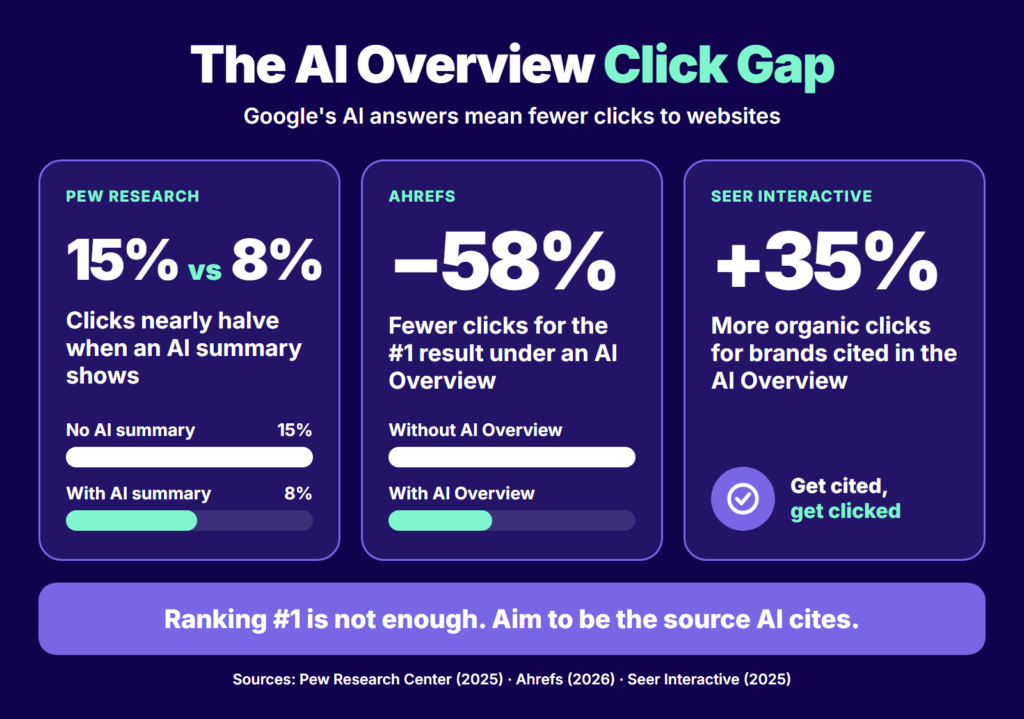
A study of real browsing data found that users click a traditional search result 8% of the time when an AI summary appears. That’s 15% when there’s no AI summary. And clicks on the links inside the summary happen to be only around 1%.
Another study by Ahrefs analysed 300,000 keywords and found that AI Overviews correlate with a 58% lower click-through rate for the top-ranking page. Moreover, Seer Interactive’s study found that brands cited in an AI Overview earned 35% more organic clicks than brands left out of it.
Does Google Require Special Optimisation for AI Overviews?
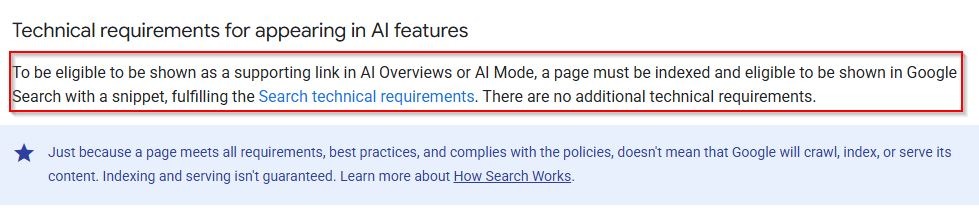
The simple and short answer is no. Google’s own documentation states that “There are no additional requirements to appear in AI Overviews.” All you need in order to be eligible as a supporting link in AI Overviews is this: your page must be indexed and eligible to show in Google Search with a snippet.
This means everything else you might have heard about appearing in AI results might be wrong. The most important thing is to solidify your SEO foundations; the AI rankings or citations come as a result. Here’s the stuff that works in traditional as well as AI SEO:
- Allow Google to crawl your website in robots.txt
- Use internal linking so that important pages are easy to find
- Make sure your web pages offer a user-friendly experience
- Use your key information in text form, not just in media (images and videos)
- Implement structured data and make sure it matches what’s on the page
- Keep your Google Business Profile (If you have one) up to date
Do You Need to Rank in the Top 10 to Get Cited?
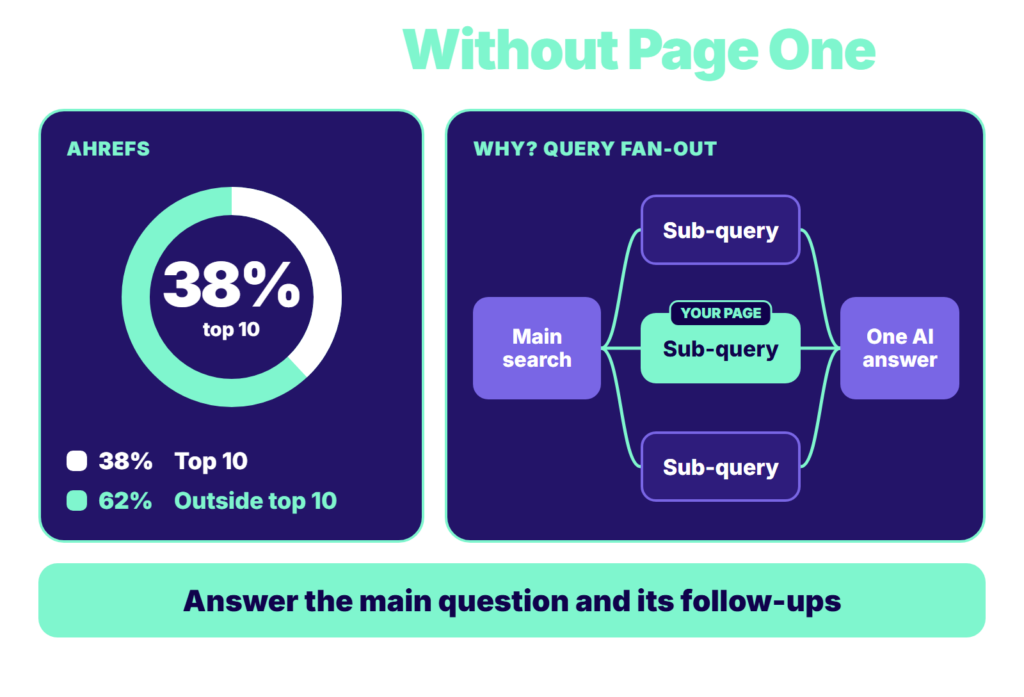
You don’t need to rank in the traditional search to get cited in AI Overviews, but it can help. Ahrefs found that only 38% of pages cited in AI Overviews also rank in the top 10 for the same search query.
One reason could be the “query fan-out.” It’s when AI Overviews and AI Mode run several related searches to build a single comprehensive answer. This means your page can get cited for a related sub-query, even if it doesn’t rank on page one for the main keyword.
This points to the importance of topical depth. If your page answers a primary question as well as the follow-up questions, Google is more likely to pull it in.
How Can You Show Up in Google AI Overviews?
Here’s a practical approach you can start with, based on Google’s guidance and the research we cited above.
1. Fix the Technical Basics First: Check that your key pages are indexed and not blocked by robots.txt, noindex tags, or nosnippet settings. If Google can’t show a snippet, it can’t cite you.
2. Answer the Question Early: Under each heading, directly answer the main question in a few lines, then expand it. This can help Google pick the exact part that addresses a query.
3. Use Question-Based Headings: Understand the way people actually search. Headings that mirror real questions are more aligned with the types of queries that trigger AI Overviews.
4. Cover the Follow-Up Questions: A page that covers related or follow-up questions has more chances to be cited because of query fan-out.
5. Strengthen Your Claims with Evidence: Use specific statistics, named sources, and expert input to make your content more credible and citation-worthy.
6. Keep Your Content Up-to-Date: Keep every important piece of information on your website fresh and accurate. Update your pages when facts, figures, or best practices change.
How Can You Track Your AI Overview Visibility?
When you don’t know where your content falls short, you can’t devise a clear plan for improvement. Google has already started showing a generative AI performance report in Search Console for some websites.
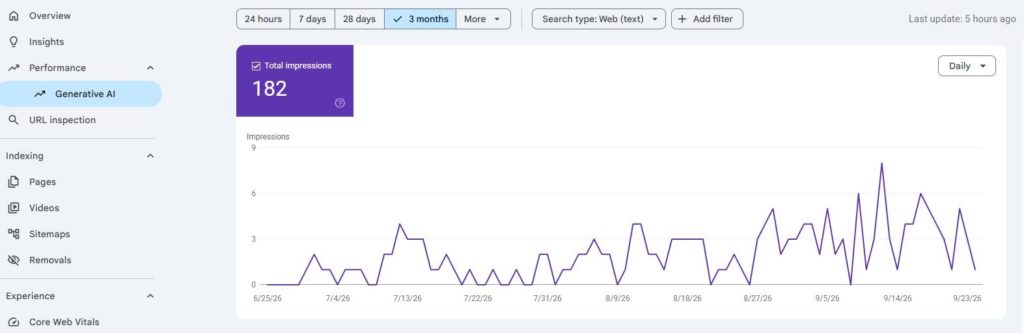
It shows impressions, pages, countries, and devices for your appearances in AI features.
How Can AI SEO Help You Get Cited in AI Overviews?
To have your content cited in AI Overviews, build a solid technical SEO foundation, structure your content the right way, and avoid using any tricks or shortcuts.
SEO isn’t complicated. But it does have many moving parts, and a business owner with so much already on their plate is better off working with professionals.
AI SEO helps business owners like you with every part of SEO, from traditional to GEO and AEO. Stay visible wherever your customers search.