To rank in ChatGPT, the first thing you need to make sure of is that your website is accessible to OpenAI’s search crawler. Your content should also be useful and relevant to the search query you want to show up for.
Your brand needs a strong presence across the web as well; this is because ChatGPT and similar AI models learn about businesses from more than their own websites. There’s no list of ten results in ChatGPT, so ranking works a little differently here. You’re aiming to be a source ChatGPT reads, mentions, and links to in its responses.
This guide gets into the details of how ChatGPT picks its sources and what you should do to show up in its answers.
What Does It Mean to Rank in ChatGPT?
Ranking in ChatGPT means you get mentioned, recommended, or cited with a link to a web page on your site when someone asks a question relevant to your business.
Let’s say someone asks, “What’s the best CRM software for small UK businesses?” The answer isn’t a simple definition. It might be a list of CRM tools with links to a few of them. And if your tool or content around it appears in that answer, you’re ranking for that question.
Getting yourself cited in an AI tool like ChatGPT matters more than ever. Sam Altman shared that ChatGPT now has 1.2 billion weekly users at OpenAI’s DevDay in September 2026. And it’s fair to presume that many of those people ask for product advice, service recommendations, and answers your website could provide.
How Does ChatGPT Choose Which Websites to Show?
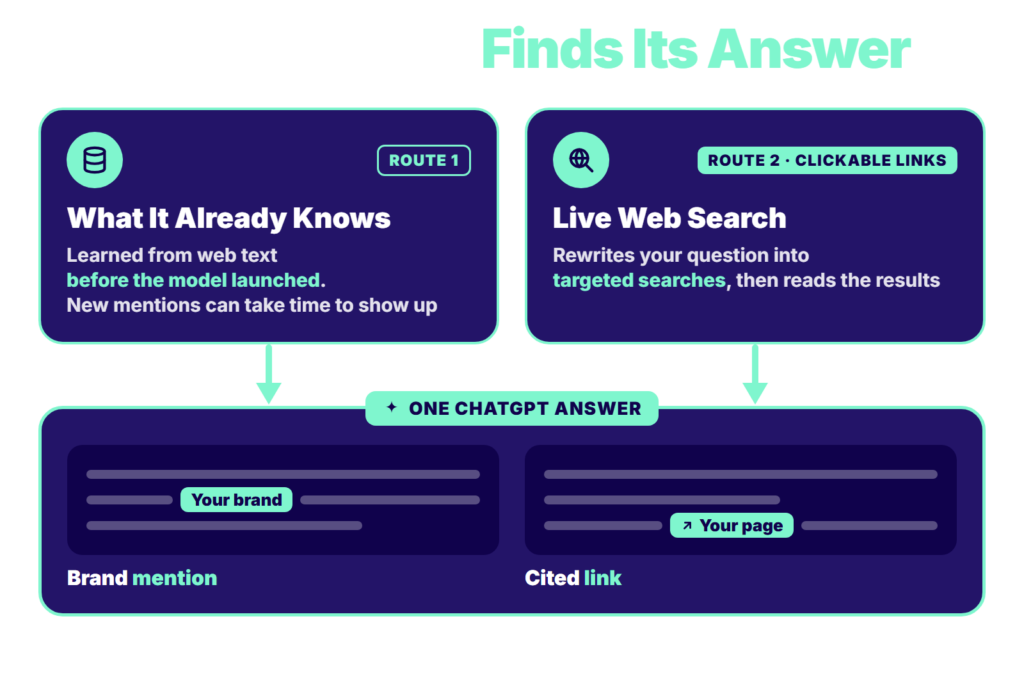
Any AI tool draws its information from two main sources: What it already knows and what it can find in a live search. Let’s look at both.
What ChatGPT Already Knows: Each ChatGPT model learns from a huge amount of text before it launches. If your brand appears across the web before the model launched, it’s more likely to know about you and mention you. This “Database” gets updated only when OpenAI launches a new model, so the brand mentions you earn today may take time to show up here.
What I Can Find in a Live Search: ChatGPT searches the web for questions that need fresh and up-to-date information. It can even rewrite your question into one or more targeted search queries and send them to search providers. It then reads the results and writes an answer with links.
That second route is where you can earn a clickable mention. This means if you want to rank in ChatGPT, you should work on your reputation, as well as your website’s content.
Do You Need to Rank on Google to Rank in ChatGPT?
The short answer: It does not guarantee ChatGPT ranking, but it can help. Ahrefs found that 6% to 8% of the pages ChatGPT cites rank in Google’s top 10 for the original question asked. This suggests that even if a page isn’t among the top 10 search results, it can get a citation in ChatGPT.
One likely reason would be that it rewrites a question into its own search queries, which may not match the exact keyword you target. It means that ChatGPT can pick up your page for a related question.
Traditional search engine optimization still gives you a head start. LLMs use search engines to craft their answers, so well-written pages that rank in search are highly likely to surface in AI answers.
Read About How Different SEO Concepts Fit Together in Our Comparison Post on GEO vs SEO vs AEO.
How Can You Rank Your Website on ChatGPT?
Start with these practical steps:
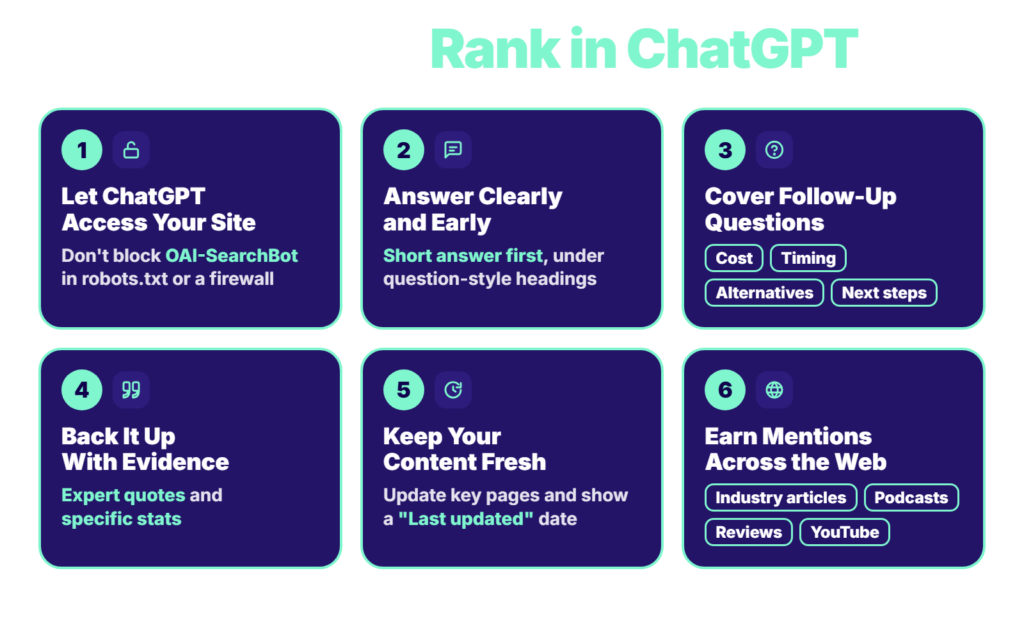
1. Make Sure ChatGPT Can Access Your Website
Any public website can appear in ChatGPT search. But to get your content discovered, surfaced, and clearly cited, you shouldn’t block OAI-SearchBot, OpenAI’s search crawler. Check your robots.txt file and make sure it’s not blocked. The second check would be asking your developer or hosting provider if a firewall or security tool is blocking AI crawlers.
2. Answer Questions Clearly and Early
Start each section with a short, direct answer, then add more to the answer. Try to use headings that match the way people usually ask questions, such as “How much does a typical plumbing job cost in the UK?” This makes it easy for ChatGPT to find the part of your page that addresses the query.
3. Cover the Follow-Up Questions
People often don’t stop at the first question; they ask follow-up questions, which can be about cost, timing, alternatives, next steps, etc. If your page answers those follow-up questions in addition to the main question, it has a much higher chance of ranking.
4. Back Up Your Content With Evidence
This is similar to how traditional search results rank. If your content has strong sources behind it, it tends to have better authority. When you back your points with expert quotes and specific stats, you’re more likely to be trusted by AI chatbots as well.
Read Our Guide on Generative Engine Optimization for a Deeper Dive.
5. Keep Your Content Fresh
Your content’s “Freshness” matters, too. An Ahrefs study of around 17 million citations found that ChatGPT showed the strongest preference for fresh content of all the AI assistants it tested. So update your key pages when needed, such as when a price, fact, or best practice changes. Show a clear “Last updated” date.
6. Earn Mentions Across the Web
Your website is only part of the broader picture. Ahrefs found that brands with more web mentions tend to get more visibility in ChatGPT, as well as in Google’s AI Overviews. Industry articles, podcasts, reviews, and YouTube videos can all help ChatGPT recognise your brand.
How Do You Track Your ChatGPT Rankings?
Tracking ChatGPT rankings isn’t the same as tracking traditional Google rankings. You can measure your visibility in a few ways:
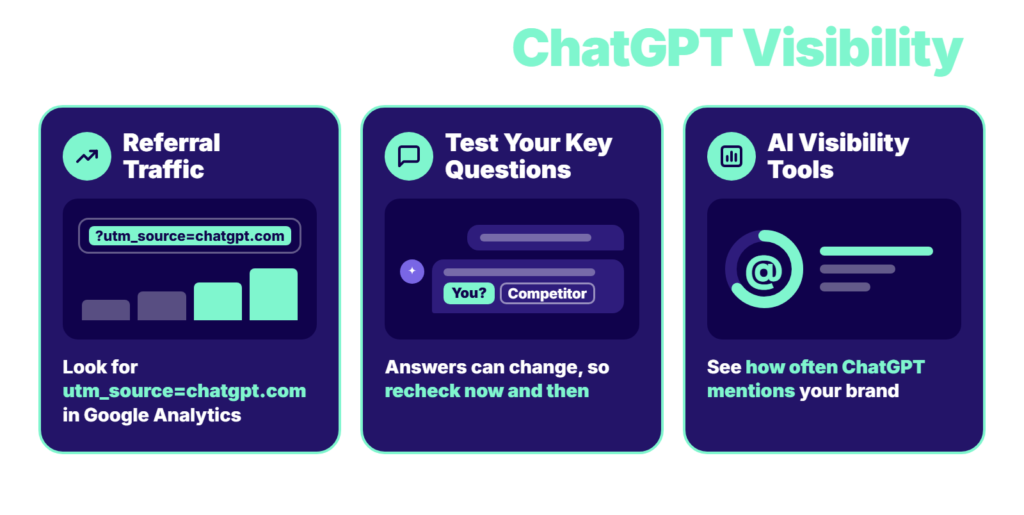
Check Referral Traffic: ChatGPT adds the UTM parameter utm_source=chatgpt.com to referral links, so you can track these visits in Google Analytics.
Test Your Key Questions: Ask ChatGPT the questions your customers ask (Or might ask), then see if your website or brand appears. Note how it describes you and which competitors show up. One thing to note here: these answers can change from one run to the next, so it’s a good idea to recheck them after a while.
Use an AI Visibility Tool: There are tools that can help you track your AI visibility and how often ChatGPT mentions your brand.
How Can AI SEO Help You Rank in ChatGPT?
Ranking your web pages or brand name in ChatGPT answers might not be like ranking in Google’s top 10 results, but it needs a solid technical foundation. In addition to that, you need to make your content friendly for AI answers, work on your digital PR strategy, and track your citations. AI SEO helps small business owners like you with virtually all parts of that. We’ll make your site accessible and cite-worthy of ChatGPT mentions.