Zero-click searches end up without the user clicking on any website link. They get the answer to the query straight from the search results page, such as Google’s AI Overviews and featured snippets.
Zero-click searches have been growing since search engines started answering questions directly, eliminating the need for users to click through to any website. That changes how businesses get found on search engines, how you measure your SEO, and what it looks like to win in search.
This guide discusses zero-click searches in more detail: why they’re growing, whether they can hurt your business, and how you can adapt. Let’s get started.
What Is a Zero-Click Search?
Zero-click searches happen when Google, or other search tools, answer questions directly on the results page. When users get the answer, they don’t feel the need to visit a website and leave. Since Google’s AI Overviews now provide comprehensive answers, many searches can end up getting no website visits.
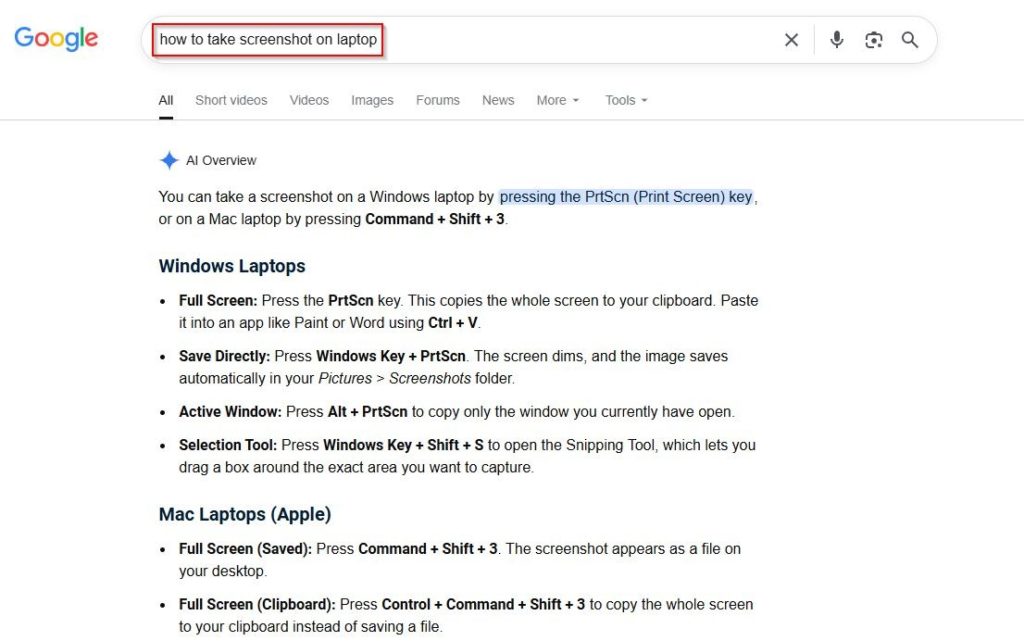
Say you search “How to take screenshot on laptop.” The AI Overview gives you a direct answer to that question at the top. You have the answer, so you don’t click any link. That’s a zero-click search.
The same happens with other AI tools like ChatGPT and Perplexity. They often give you a complete answer in the chat, so many people never open a source link at all.
What Are Some Examples of Zero-Click Searches?
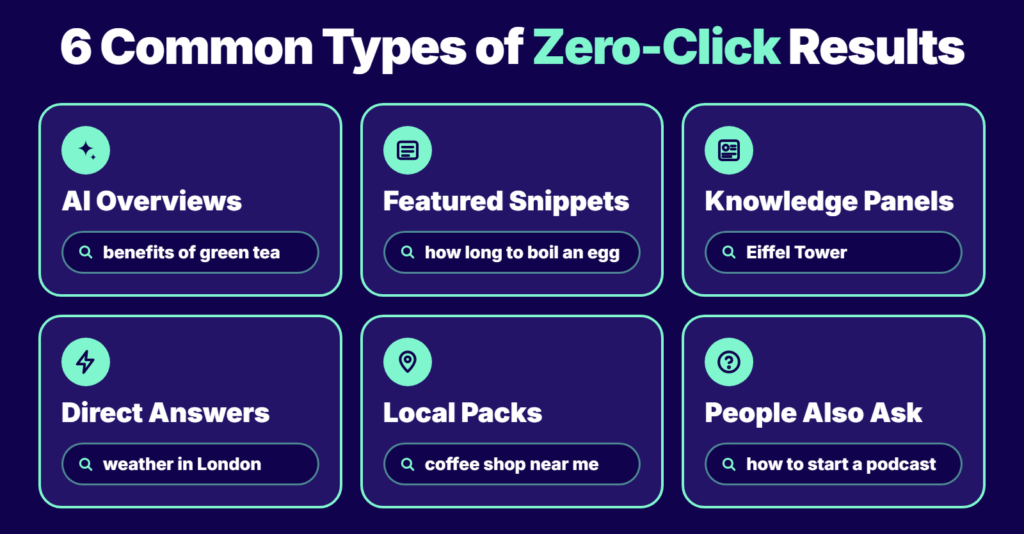
Zero-click searches usually come from search features that show the answer on the page. Common ones include:
- AI Overviews: AI summaries at the top of Google that answer the question concisely
- Featured Snippets: A short answer pulled from a web page and shown in a box above other results
- Knowledge Panels: Information boxes about popular brands, people, and places
- Direct Answers: Quick answers like the weather, sports scores, time zones, and unit conversions
- Local Packs: Results pulled from Maps showing nearby businesses with their basic information
- People Also Ask: Expandable boxes with short answers to questions related to the main search query
How Many Google Searches End Without a Click?
A study by SparkToro and Similarweb found that 68% of Google searches in the US ended without a click to any website in the first four months of 2026. This means when someone searches on Google, they’re more likely to end up returning without visiting a website. That’s a big shift, especially from an era when search was mainly a list of ten blue links.
Why Are Zero-Click Searches Increasing?
Zero-click searches are increasing because search engines now answer more questions. The user doesn’t need to open a website to get what they came for.
Google has added more SERP features over the years, from snippets to knowledge panels to local packs. AI Overviews took this further by offering comprehensive answers at the top of the search results page. We cover how AI Overviews work in more detail here.
AI Mode goes deeper into the main query, which is probably why a recent Semrush study found that only 6% to 8% of AI Mode sessions led to a visit to another website. In other words, over 90% of those sessions were zero-click.
Many people now expect a quick answer on the results page, and they only visit a website when they want more details, or they’re ready to act.
Which Searches Are Most Likely to Be Zero-Click?
Quick, factual questions often have straightforward answers. They tend to end up without a click. Definitions, dates, weather, time zones, calculations, and straightforward questions like “What is a zero-click search?” are more likely to be zero-click searches.
That doesn’t mean longer questions don’t trigger AI answers. Pew Research Center’s study of real browsing behaviour found that searches with 10 or more words produce an AI summary 53% of the time. Moreover, searches starting with question words like “Who” and “What” got an AI summary 60% of the time.
Local business search can also end up without a click, too. For instance, someone searching “plumber near me” might call a business straight from their map listing, without touching their website.
How Can You Adapt Your SEO to Zero-Click Searches?
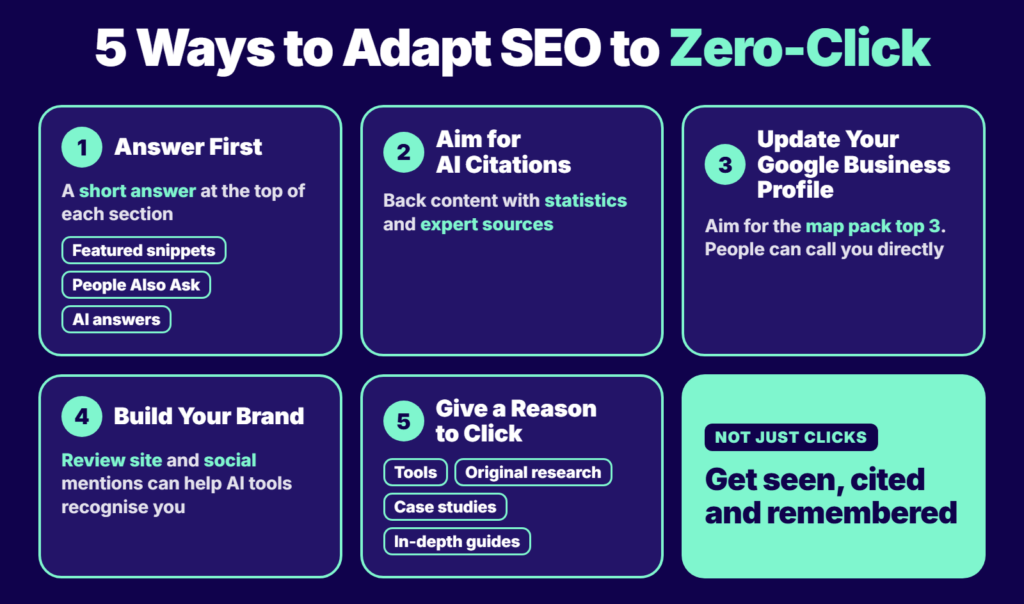
Stop chasing clicks alone. Your goal should be to get seen, cited, and remembered. Here are some tips:
Answer Questions Directly and Clearly: Put a short, direct answer at the top of each section or heading. This way, your content has a higher chance of appearing in featured snippets, People Also Ask boxes, and AI answers.
Aim for AI Citations: Use statistics and expert sources to strengthen your content’s credibility. Our guide on generative engine optimisation explains this.
Keep Your Google Business Profile Up to Date: For local business owners, map pack visibility is super important. Ranking in the top 3 spots is a major goal. It’s a zero-click spot because users can end up calling directly without clicking on your website. So, ranking there lets you generate conversions without having to attract traffic to your website.
Build Your Brand: Your GBP and website may be the most important assets, but mentions on other platforms like review sites and social platforms can help AI tools recognise and recommend you. Read our post on how to optimise your business for LLMs.
Give People a Reason to Click: Create stuff a quick summary can’t replace fully, such as tools, original research, case studies, and an in-depth guide.
How Do You Measure Success When Searches Don’t Click?
Clicks don’t tell the full picture anymore; you need to track other signals to track your visibility.
Impressions: You can now track your AI visibility in the Google Search Console Performance report.
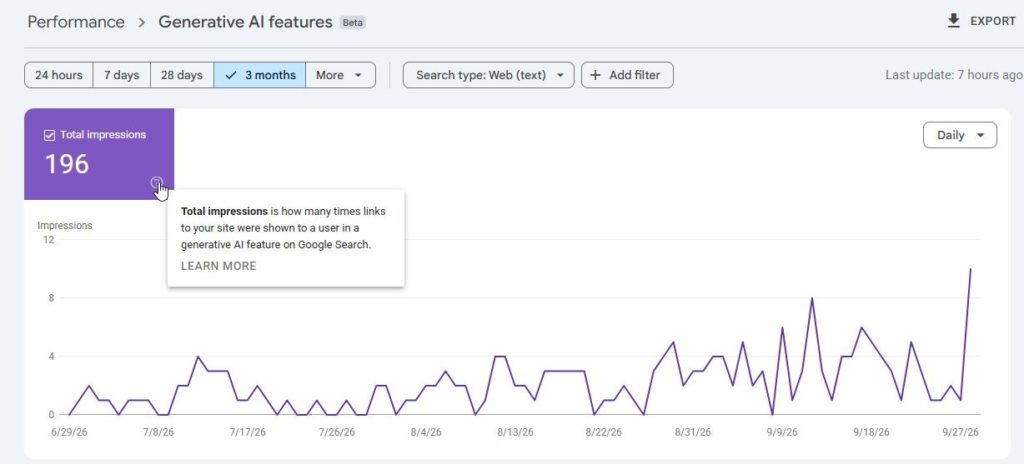
Branded Searches: When someone searches for your brand, your AI visibility may have caused that. For instance, someone sees your brand in an AI answer and doesn’t click on the link. Later on, when they search for your brand, that initial encounter with your brand in the AI answer may have played its part in that branded search.
AI Visibility: Check if AI tools like ChatGPT and Gemini mention you when you ask them a relevant question.
Conversions: Leads and sales are what matter more than raw traffic at the end of the day. Even if you’re getting enough clicks, but your enquiries are steady, your AI visibility might still be working.
Learn the differences and similarities between GEO, SEO, and AEO.
How Can AI SEO Help You With Zero-Click Searches?
Zero-click searches don’t have to mean zero results. AI SEO can help you stay visible wherever answers appear, whether it’s featured snippets, AI Overviews, local packs, or AI tools like ChatGPT. We combine SEO, GEO, and AEO so your brand is seen, cited, and chosen.