
Perplexity is one of the most reliable and well-known AI search engines right now. In June 2025, CEO Aravind Srinivas said it handled 780 million queries in May, with more than 20% growth month over month. We can safely presume an upward trend in that figure from then onwards.
What makes Perplexity different for website owners is that it gives you the sources. Each answer comes with numbered citations that link straight to the pages it used. And if your page earns one of those citations, you get a chance to attract a quality visitor to your website.
This guide gets into how Perplexity works, how it chooses sources, how it compares with Google, and how you can improve your chances of getting cited.
What Is Perplexity and How Does It Work?
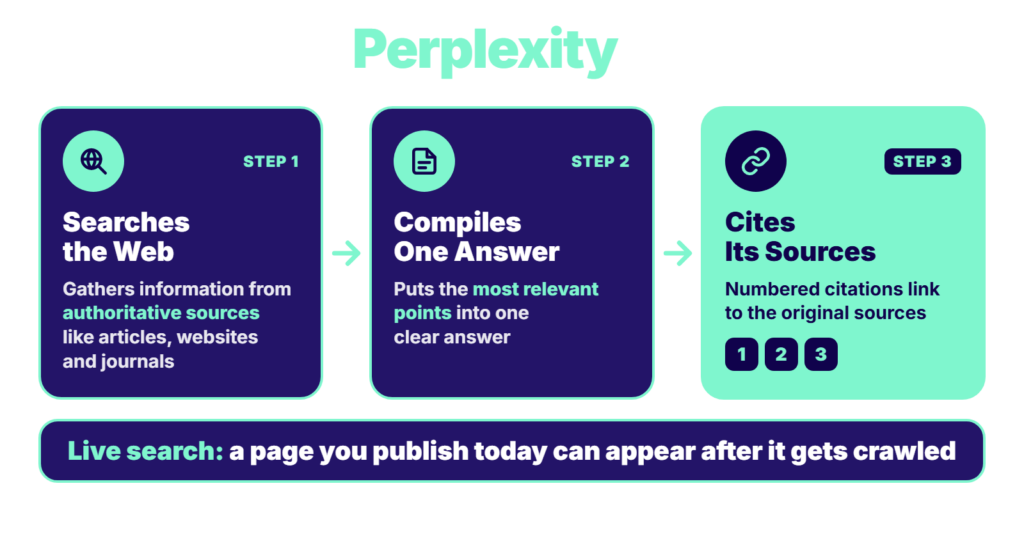
Perplexity is an AI answer engine. It searches the web in real time, picks out relevant pages, and writes an answer with numbered citations linking to those pages.
It does that in these steps, according to Perplexity’s own help centre: Search the internet and gather information from authoritative sources. Then, it compiles the most relevant points into one clear answer. Each answer includes numbered citations that link to original sources.
The live search of Perplexity is what makes it different from a typical chatbot that relies on its training data. And since Perplexity looks things up for each question, a page you publish today can appear in its answers after it gets crawled.
Perplexity runs its own crawler, PerplexityBot, which the company says is designed to surface and link websites in search results on Perplexity. The company states that this bot doesn’t collect content for training AI foundation models.
How Does Perplexity Choose Its Sources?
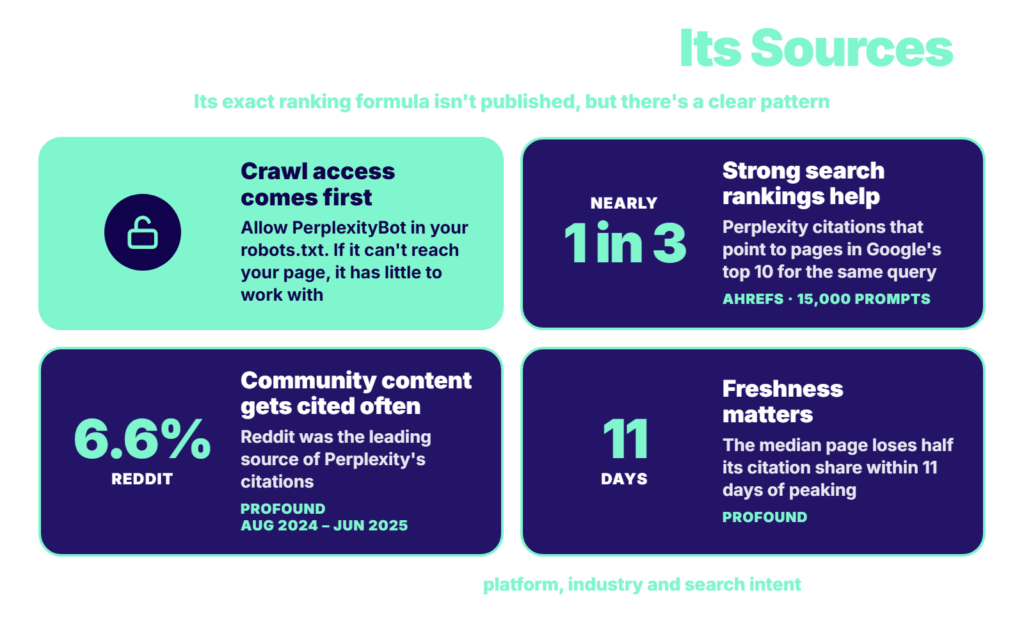
The company hasn’t published its exact ranking formula. However, its documentation points to a clear pattern: It favours pages it can crawl, pages that already perform well in search, and sources that match the search query or question.
Here’s what the evidence shows:
- Crawl access comes first: You should allow PerplexityBot in your robots.txt file if you want to appear in its results. If the crawler can’t reach your page, it has little to work with.
- Strong search rankings help: An Ahrefs study of 15,000 prompts found that nearly 1 in 3 Perplexity citations point to pages ranking in Google’s top 10 for the same search query.
- Community content gets cited often: According to an analysis by Profound from August 2024 to June 2025, Reddit was the leading source of Perplexity answers, at 6.6% of its citations.
- Freshness matters: The median page loses half its citation share within 11 days of peaking.
Note that the citation patterns can shift by platform, industry, and search intent. For instance, the sources Perplexity might favour for a product comparison may differ from those it uses for a health or finance question.
How Is Ranking in Perplexity Different From Ranking in Google?
On Google’s organic search pages, you compete for a position in a list of links, although Google’s AI Overviews also cite sources like Perplexity. But Perplexity is primarily an AI platform that cites sources it uses in its answers. So the links you get in its results appear as numbered citations.
Both still overlap more than some people might expect. There’s usually a close alignment of Perplexity’s results with Google’s top results. This suggests that search engine optimization is still the foundation on which everything else builds.
If you’ve already worked on ranking in ChatGPT or appearing in Google AI Overviews, much of that work carries over to Perplexity.
How Do You Rank in Perplexity?
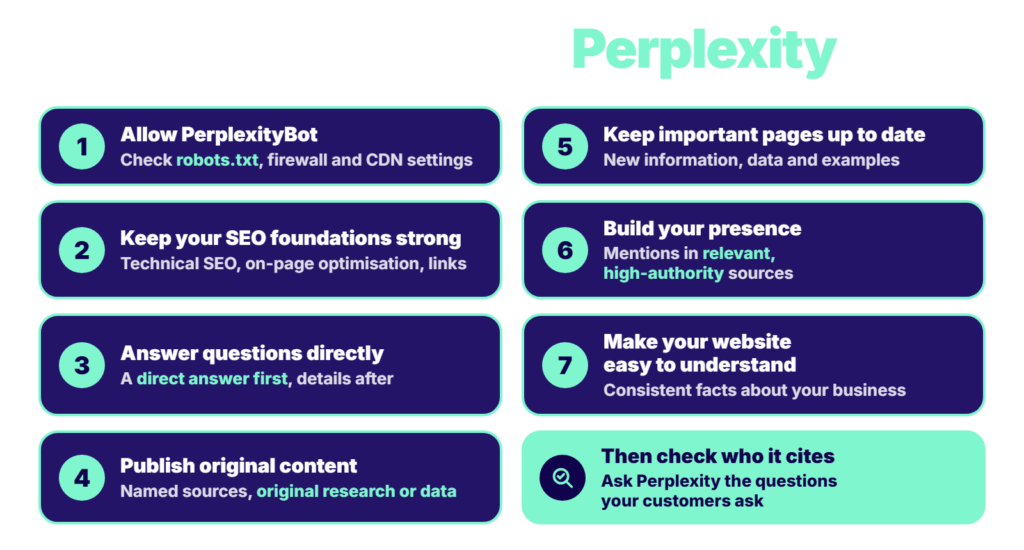
Ranking in Perplexity is similar to ranking in Google and other AI tools: You need a solid SEO foundation, allowing its crawlers in, and publishing original, well-sourced content that it can quote. Follow these steps to improve your chances:
Allow PerplexityBot: Check your robots.txt file and make sure it doesn’t block PerplexityBot. Some security tools block AI crawlers automatically, so also check your firewall and CDN settings.
Keep your SEO foundations strong: The pattern you’ll see in search results, whether it’s Google’s organic results or AI answers, is that building a solid SEO foundation isn’t an option. Get your technical SEO right, work on on-page optimization, and build links.
Answer questions directly: You want to open every section with a direct answer, then get into the details later. This gives Perplexity a clean sentence or two to quote in its answers from your page.
Original content: It probably never gets said enough: Original content is gold in this day and age. AI can write “Helpful” content, so you can think of creating pieces that can stand out. Use named sources and original research or data wherever possible.
Keep your important pages up to date: Try to refresh your key pages with new information, data, and examples regularly. Fresh content is more likely to be cited.
Build your presence: AI platforms like Perplexity can use sources like forums, reviews, news, and platforms other than your own brand’s website. Mentions in relevant, high-authority sources give it more reasons to cite you.
Make your website easy to understand: Keep facts about your business consistent across the web; it can help AI tools describe you accurately. Our guide to entity SEO explains this in detail.
How Can You Check Whether Perplexity Cites You?
The simplest check would be to ask it the questions your target customers are likely to ask and see which sources it cites. Pick a few main questions your audience might ask and search them in Perplexity yourself.
You can also use a tool like Google Analytics 4; look for sessions where the source is Perplexity.ai. This shows how many people click through from its answers.
How Can AI SEO Help You Get Cited in Perplexity?
We help business owners become the sources AI answer engines like Perplexity AI trust and cite. Our AI SEO services cover the full range, from crawler access and content structure to GEO and entity optimization. If you’d like to find out how often Perplexity cites your brand and how you can improve your visibility.