AI SEO is a process of making your website and your brand easy to find, understand, and recommend by AI platforms. These include, but are not limited to, ChatGPT, Gemini, Perplexity, Claude, and Google’s AI Overviews and AI Mode.
Here’s a quick comparison with traditional SEO: While traditional SEO involves ranking your web pages among the first 10 pages in search, AI SEO helps you get seen inside AI answers. For practical purposes, you need both.
In this article, you’ll learn what’s AI SEO, how Google’s AI and other tools like ChatGPT work, what an AI SEO specialist can help you with, and more.
What Does AI SEO Mean?
AI SEO is an umbrella term; it includes everything you do to make your business appear in AI-powered answers. This means chatbots like ChatGPT, AI summaries on Google, and even voice assistant replies fall under that broader AI SEO umbrella. Here are the terms you might hear related to AI SEO:
- Generative Engine Optimisation (GEO): Working on your content so it gets cited in AI-generated answers. Read more about it in our detailed GEO guide here.
- Answer Engine Optimisation (AEO): Involves optimisation of content to become the direct answer to a relevant question.
- LLM Optimisation: This refers to optimising your website for tools powered by Large Language Models (LLMs), such as ChatGPT.
You might hear people use these terms interchangeably. AI SEO brings them together under one name.
Why Does AI SEO Matter Now?
AI SEO matters because more people now get answers from AI before they see a website link. According to Sam Altman, OpenAI’s ChatGPT alone has reached 1.2 billion weekly users. Google now shows AI-generated answers at the top of many search results too.
When an artificial intelligence tool offers a comprehensive answer to a query, many people won’t feel the need to click through to websites. We talked about this shift in our guide on zero-click searches. The simple reality is that if your brand doesn’t show up in an AI answer to an important question, you can miss customers who may never check websites before acting.
How Do AI Chatbots Work?
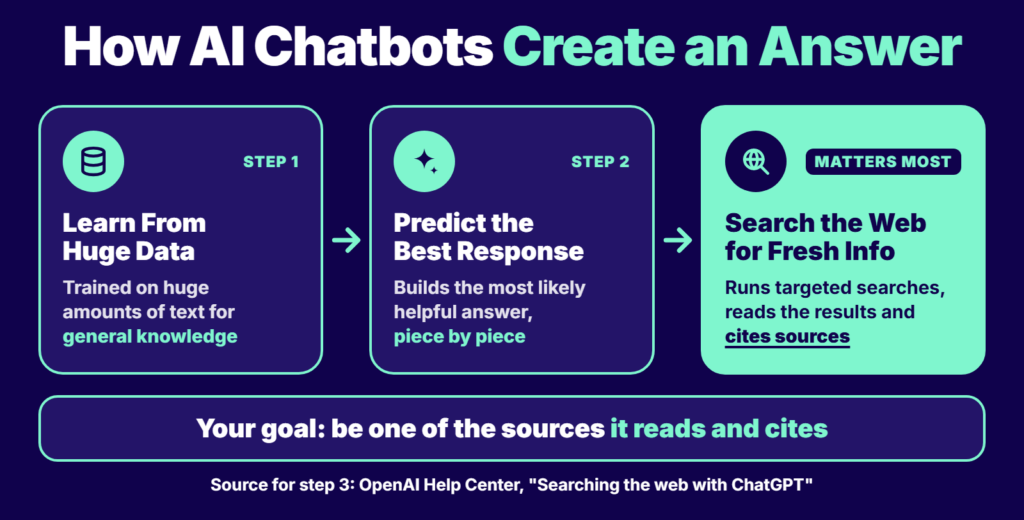
Large Language Models (LLMs) power AI chatbots like ChatGPT. Here’s how a chatbot typically creates an answer:
- They Learn from Huge Amounts of Data: The team behind an AI model trains it on a massive amount of text from several sources. This gives the model general knowledge.
- They Predict the Best Response: When you ask a question, the model comes up with the most likely helpful answer, piece by piece, based on its learning.
- They Search the Web for Fresh Information: There’s a cut-off date on the training data, so a chatbot can also perform searches in real time when the question needs it. According to OpenAI, ChatGPT search can rewrite a query into one or more targeted search queries and send them to search providers. The AI chatbot then reads the results and creates an answer with source links.
The last one matters most for your business. When a chatbot searches the web, you want your website to be one of the sources it reads and cites.
How Does Google’s AI Work in Search?
Google uses its AI models to power two main features in search: AI Overviews and AI Mode.
AI Overviews: These are AI summaries that appear at the top of search results for many queries. In 2026, Google made Gemini 3 the default mode for AI Overviews globally. It also enabled follow-up questions straight from an AI Overview in AI Mode.
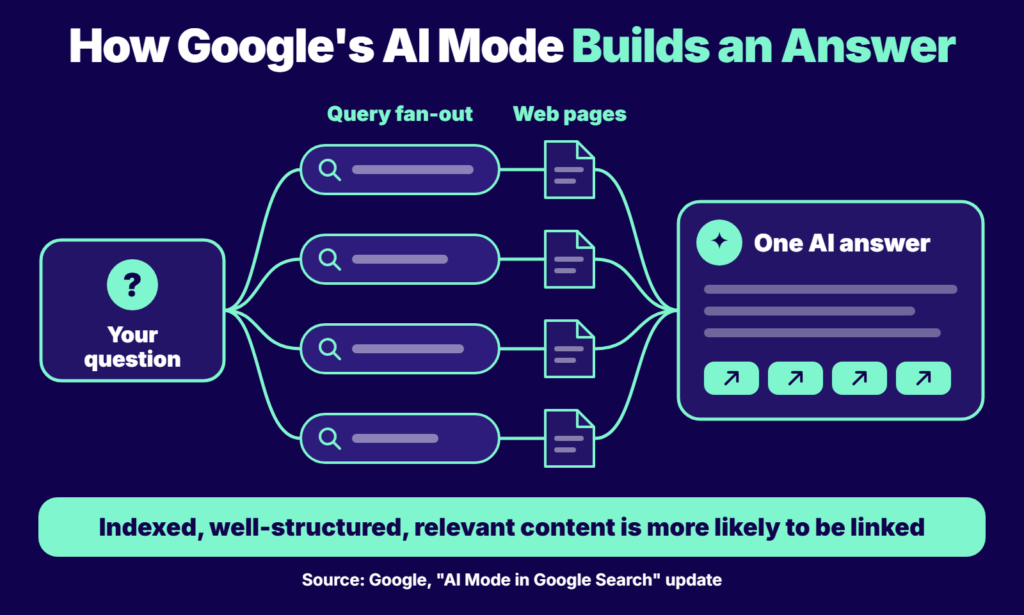
AI Mode: This is Google’s chat-style search experience. AI Mode uses query fan-out, which breaks your question into subtopics and runs several searches at once on your behalf. You then get a detailed answer with source links.
Both these features use Google’s search index to fetch relevant content. This means if your content is indexed, well-structured, and relevant, it’s more likely to be picked up and linked.
Read Our Detailed Guide on How to Win AI Overviews to Learn More.
How Is AI SEO Different From Traditional SEO?
The main difference is the goal. You aim for ranking your pages and getting clicks on them in traditional SEO. AI SEO goes for mentions, citations, and recommendations inside AI answers.
Both are closely linked. Google’s Danny Sullivan put it simply: “Good SEO is good GEO.” The same core fundamentals apply to Answer Engine Optimization and the other acronyms. The goal is to create helpful content and a good page experience.
This simply means that AI SEO doesn’t replace search engine optimization; it just adds a layer. A layer of doing extra for your brand’s reputation and authority across the web and how clearly AI systems can understand you. We did a side-by-side comparison of GEO, SEO, and AEO if you want to learn the differences and where these terms overlap.
What Does an AI SEO Strategy Include?
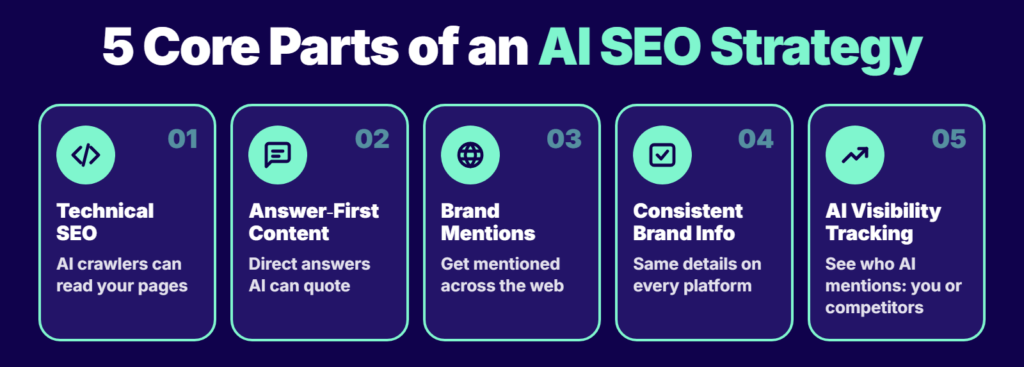
An AI SEO strategy typically covers five core areas:
- Technical SEO: This ensures AI crawlers and search engines can read and understand your pages. A blocked or non-indexed page can’t be cited.
- Answer-First Content: AI tends to pick up content that answers the searched query directly. Clear headings and direct answers can make your content easy for AI tools to quote.
- Brand Mentions Across the Web: Search engines and AI tools learn about your business from multiple sources, not just your website. Ahrefs found that brands with more web mentions tend to get more visibility.
- Consistent Brand Information: Your name, services, and key facts should match everywhere online, including your website, business directories, and review sites.
- AI Visibility Tracking: Tracking tells you if AI tools mention your brand, what they say about it, and which competitors appear instead.
What Can an AI SEO Specialist Help You With?
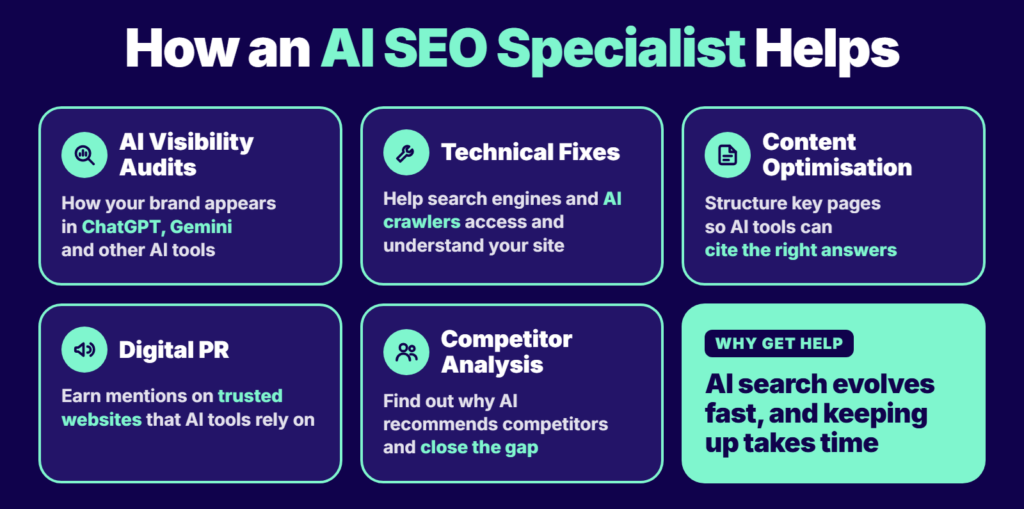
AI search engine optimization evolves fast, and keeping up can take a lot of time. An AI SEO specialist can help you with the following:
- AI Visibility Audits: Checking how your brand currently appears in ChatGPT, Gemini, and other AI tools.
- Technical Fixes: Making sure search engines and AI crawlers can access and understand your site.
- Content Optimisation: Structuring important pages so AI tools can find and cite the right answers.
- Digital PR: Earning mentions on trusted websites that AI tools rely on.
- Competitor Analysis: Finding out why AI tools recommend your competitors, and closing that gap.
You can see all the AI SEO services we offer on our AI SEO services page.
How Can AI SEO Help Your Business?
AI search optimization isn’t a standalone strategy separate from traditional SEO. It builds on your technical foundations, content, digital PR, and ongoing tracking. We help business owners with virtually all parts of that, so your brand gets in front of your prospects.